MRS Gren, BENGRIM
You would’ve covered it in Year 7, but we need to remember what all living things must do in order to be deemed living. There are 2 ways to try remember this and both are listed below.
Before we scroll down though, see if you can write down in your books what 7 Things are required for something to be a living thing?
Also, try to think if the following things are alive or dead:
– Fire – Water – Moss – Timber – Hair – Sewerage
Alright, you’ve had some time to think. Did you remember them all? Copy them down into your books as listed below to help remember. Notice there are some overlapping terms which mean the same thing.
| BENGRIM | MRS GREN |
| Breathing | Movement |
| Excretion | Respiration |
| Nutrition | Sensitivity |
| Growth | Growth |
| Reproduction | Reproduction |
| Irritability | Excretion |
| Movement | Nutrition |
Meeting the Cells
Ah the cell, the come in a range of shapes and sizes and all of them are so small that you’ll never see them with the naked eye. Humans however, are a clever bunch that made it possible to see this invisible world by focusing visible light and allowing us to see the world at a much smaller scale.
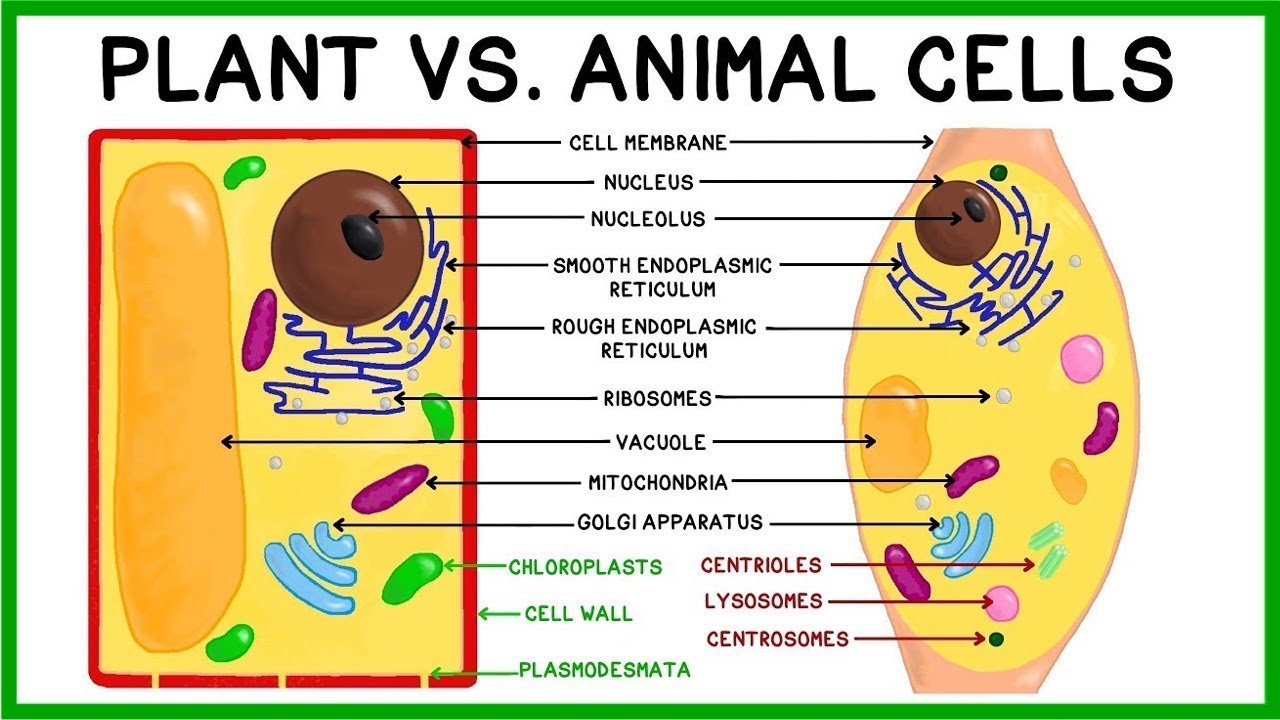
All current knowledge suggests that all cellular life came from the same origins, though over time they have evolved different ways to live and adapted to their surroundings. You will notice that many parts of the cell are similar in the diagram, however a few mechanisms are different.
Unicellular Vs Multicellular
Unicellular life lives and works on its own. It provides food for itself using photosynthesis or eats other smaller cells and reproduces by branching out.
In multicellular organisms, there is a hierarchical order to life and how it functions. No one cell is key to the whole system operating, rather a cluster of them working together. They are
- Cell – Smallest unit of life, within the cell things are considered to be non living
- Tissue – Made of a group of similar cells working together
- Organ – Made of multiple tissues working together, e.g. Heart
- Organ system – Allows the function of an organ, e.g. Circulatory system
- Organism – the actual living thing that moves and lives as a whole
The Microcosmos
We’ve made it through the refresher! In Year 7 we didn’t cover much of Unicellular life because it’s too small to show in the classroom due to it’s tiny scale and difficulty to keep alive. Since then a great new YouTube channel as turned up which allows us to see things moving and living in a single drop of water!?!
So, take some time to sit back and think, the things you’re about to see, could all fit in a single drop of pond, river or pool (less likely) that could’ve swam in over the hot weekend… ewwww!
The Human body
*Due to recent school health and safety reasons we can no longer open up students to show them exactly HOW their insides work… it’s a real shame but apparently it’s for the better. Once the human body’s major defence mechanism, the skin, is opened up it can allow all the nasty things around you to get inside and cause infection. So instead, here is a video.
(NOTE: Video not for faint of heart… if the video doesn’t work, you might need to sign in with your school account first…)
*Schools never actually opened up students and you are safe, no need to worry!
The Human Body Game
To get to interact with these body systems in a little more detail, this game will go through some of the organs and show you detailed Xrays. Can you remember them all?
https://thehumanbodygame.co.uk/
How does it all work?
We’ve looked over (and inside the body…) a little bit now, but what makes living things tick? Where does all their energy come from? Most of you would’ve all started off with something to eat this morning or had a big meal over the weekend and are still burning it off now…
Hang on… why do we say burn off food? It’s not like there is a fire in your stomach that’s turning all your food into smoke, otherwise you would all be mini chimneys. So what IS happening to your food then?
 Mr Danic